
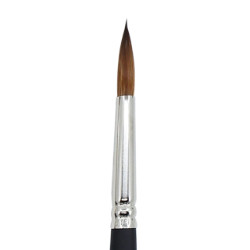
Why Have Sable Artist Brushes Become More Expensive?
Understanding the challenges of importing natural-hair artist brushes.
If you've purchased a genuine sable or Kolinsky sable artist brush in recent years, you've probably noticed that prices have increased considerably.
At ZEM Brush Manufacturing, we understand these concerns. With over 40 years of experience in the brush industry, we've seen many changes in the availability and cost of natural brush hair.
We'd like to explain some of the reasons behind these price increases and why importing high-quality sable brushes has become increasingly challenging.
1. Genuine Sable Hair Is Becoming Harder to Source
One of the biggest challenges facing brush manufacturers is the limited availability of high-quality natural hair.
Kolinsky sable brushes are made from the tail hair of the Siberian weasel, an animal primarily found in parts of Asia. This special hair is prized for its excellent paint-holding capacity, fine point, and natural spring.
Over the past several years, the supply of premium Kolinsky hair has become increasingly restricted.
One important reason is the declining fur industry. Historically, brush manufacturers obtained tail hair through suppliers connected to the fur trade. As fewer pelts become available, there is also less suitable hair for brush production.
This limited supply continues to put pressure on prices.
2. Import Regulations Have Become More Complicated
Importing certain natural-hair artist brushes into the United States is not as simple as ordering synthetic brushes.
Kolinsky hair derived from the Siberian weasel is subject to international wildlife trade regulations, including CITES requirements.
Depending on the species, origin, and shipment, importers may need special documentation, wildlife declarations, inspections, and permits.
These requirements can create additional expenses and delays for manufacturers and importers.
Even when brushes are manufactured overseas and ready for shipment, completing the necessary import procedures can be time-consuming and costly.
3. Higher Manufacturing and Labor Costs
Producing a quality sable brush requires skilled craftsmanship.
Unlike many synthetic brushes, premium natural-hair brushes require careful sorting, preparation, and assembly.
The hair must be selected for quality, length, elasticity, and its ability to form a precise point.
Skilled brush makers then carefully shape and assemble each brush to achieve the performance professional artists expect.
Increasing labor, material, and production costs have added further pressure to brush pricing.
4. International Shipping, Duties, and Import Expenses
Many natural-hair artist brushes and their components are sourced internationally.
Over the past several years, manufacturers and importers have faced changing freight rates, customs expenses, tariffs, and other international trade costs.
These additional expenses can significantly affect the final landed cost of a brush in the United States.
Import duties vary depending on the product's classification, country of origin, and applicable trade regulations.
For smaller brush manufacturers and distributors, absorbing every additional expense is not always possible.
5. Why Have Prices Remained High?
Although some raw Kolinsky hair prices have declined from their earlier peaks, they remain historically elevated.
Limited supplies of premium hair, fewer suppliers, complicated international trade requirements, and manufacturing expenses all contribute to the challenge.
Even when raw material prices decline, the savings may not immediately appear in finished brush prices because manufacturers must also account for production, transportation, and inventory costs.
6. Are Synthetic Brushes a Good Alternative?
Absolutely!
Modern synthetic brush fibers have improved tremendously over the past several decades.
High-quality synthetic fibers, including Golden Taklon and Kolinsky Synthetics, offer excellent durability, consistent performance, and outstanding value.
For many painting applications, synthetic brushes are an economical and practical alternative to natural sable.
However, genuine sable and Kolinsky sable brushes continue to offer unique characteristics that many professional artists appreciate, especially for watercolor, miniature painting, fine detailing, and other precision work.
We believe both natural-hair and synthetic brushes have an important place in an artist's collection.
Our Commitment at ZEM Brush Manufacturing
As a family-owned brush company, we understand how important quality and affordability are to our customers.
Our goal has always been to offer dependable artist brushes at competitive prices while maintaining the standards our customers expect.
We continue to work with our manufacturing partners and material suppliers to provide a wide selection of natural-hair and synthetic brushes.
While the international brush market continues to change, our commitment to quality, craftsmanship, and customer service remains the same.
Thank you for supporting ZEM Brush Manufacturing and the art of brush making.
The ZEM Brush Manufacturing Team